
BC Strategy Insights

Your board chair wants to see an “AI action plan”? This is it.
Most AI programmes do not fail because of the technology. They fail because organisations pursue too many use cases, choose the wrong tool for the task, or lack clear ownership of delivery. Our three-step playbook — Discover, Pick, Deliver — shows how to identify where AI genuinely outperforms conventional automation, prioritise the opportunities that matter, screen them for risk, and turn a long list of ideas into a focused portfolio that can actually deliver value.
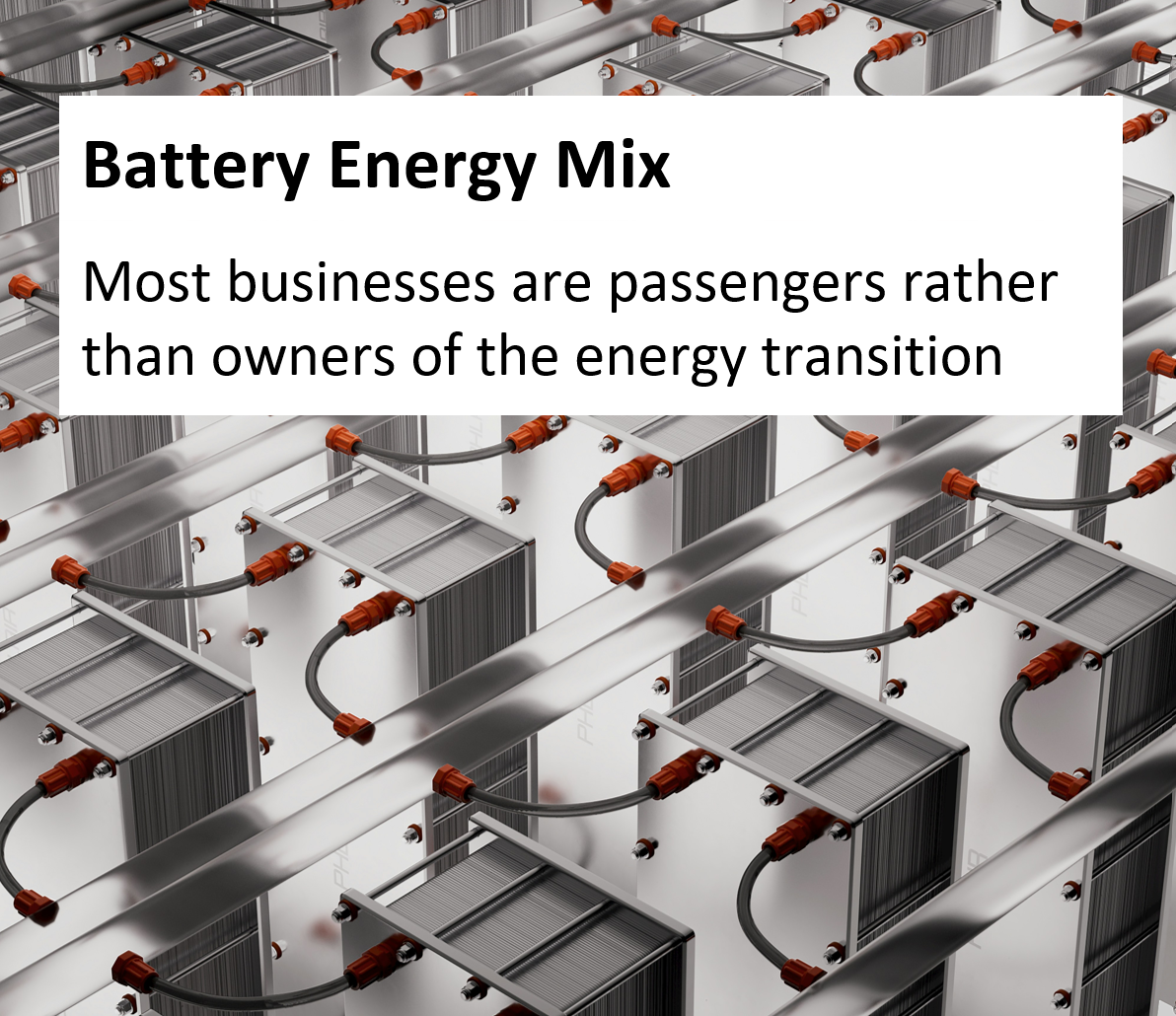
Australia is building the energy system of the future. Most businesses that rely on it are merely passengers.
Australia’s electricity demand is expected to nearly double by 2050, requiring major investment in storage and grid infrastructure. Although some residential prices have fallen, network and fixed charges are rising, shifting more costs onto connected users. For businesses with high energy costs, behind-the-meter solar and storage may offer greater control, resilience and long-term savings, but the right decision depends on each site’s load, constraints and exposure.

Just renting the boom? AI contribution to economic growth.
AI is doing more to grow Australia's economy than America's. But what we have does not compound in the same way.
Outside the US, Australia is one of the powerhouses for AI infrastructure. A >$150bn data-centre pipeline spend that, with the energy build attached, will materially impact GDP.
Why top strategy firms obsess over hypotheses.
Good strategy follows a method: hypothesise, test, decide. Without hypotheses, due diligence drifts and growth strategy stalls. With them, every question tests a belief, every answer moves closer to a decision. The difference: useful information, not more information. You don't hire a strategy firm just for their process. You hire one to make a better decision.

GenAI economics are about to get real
GenAI economics are about to get real. An incoming pricing reset will eventually reshape your new AI cost structure
Current AI prices reflect a subsidy phase, not a stable end-state. Enterprises building on today's flat-fee plans face a 10-35× cost increase as providers move toward sustainable economics.

Had to Leave Australia: What R.M. Williams, GYG and A2 Milk Tell Us About Going Global
R.M. Williams hit 65 stores and a domestic TAM ceiling, then opened on Jermyn Street. Double-digit UK growth, three years running. But GYG is down 52% selling Mexican food to America, and A2 Milk lost 79% of profit when COVID shut the daigou channel. When does going global reflect genuine strategic intent, and when is it investor theatre? Four brands. Three questions every board needs to answer.
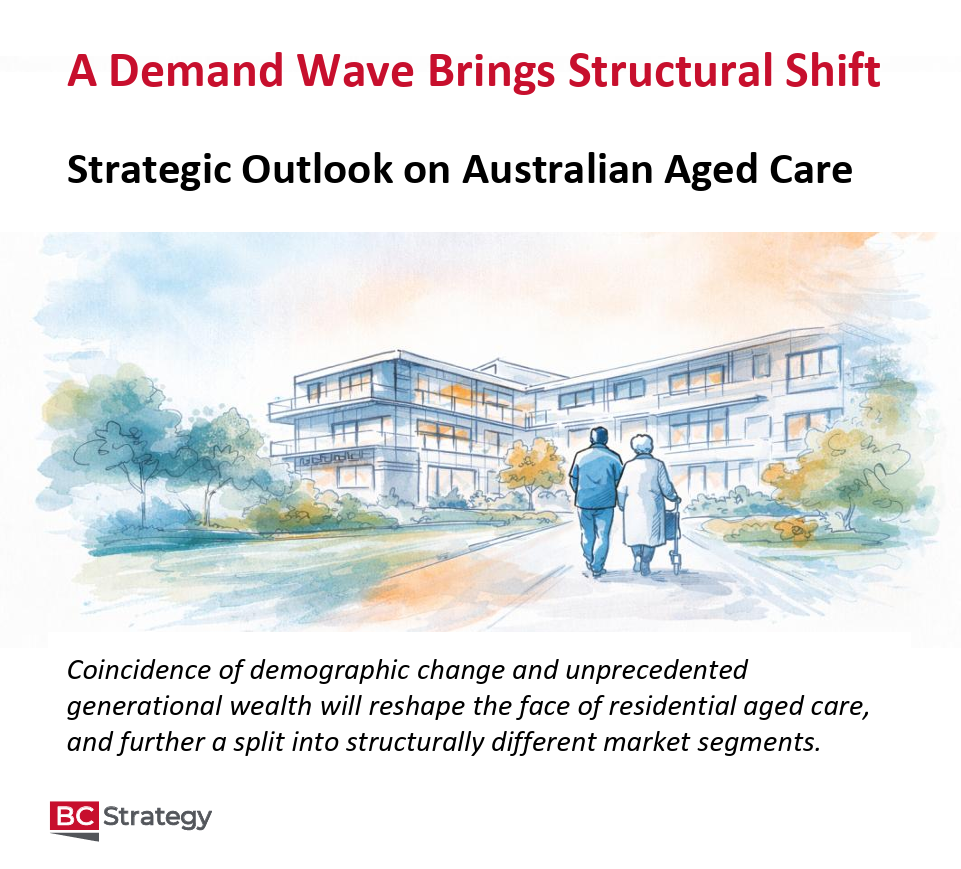
A Demand Wave Brings a Structural Shift: Strategic Outlook on Australian Aged Care
Bain Capital making moves to relist Estia Health is a signal: Australian aged care is about to enter its next phase.
The 85+ cohort is growing fast and may be the wealthiest generation ever to enter late old age. Australians over 65 already control more than a third of national household wealth.
But modern seniors don’t just have more money. They have:
• higher expectations
• stronger choice behaviour
• less tolerance for institutional experiences
As the lines to retirement living offerings are blurring, aged care is shifting from a last-resort service to a late-life consumer category.

The Slop Bowl Economy: When Growth Slows, Advantage Breaks
The Slop Bowl Economy: When Growth Slows, Advantage Breaks
Fast casual “healthy bowl” chains are facing their reckoning in 2025. Sweetgreen is down –72% YTD, CAVA –44%, Guzman y Gomez –38%, and even Chipotle –35% — while McDonald’s and Yum! Brands quietly post gains.
The same diners, the same economy — so why the split?
Macro exposure. Stagflation squeezes margins: fast casual bears higher labour (30–35% of sales) and ingredient costs, while delivery platforms skim margins. Customers trade down to value meals or skip $16 salad bowls altogether.
Flawed growth playbooks. Adding stores hasn’t solved structural cost traps. Scratch kitchens, fragile supply chains, and rising overheads compound fragility. Scale has not delivered efficiency.
Strategy gap. Expansion ≠ strategy. The real game is bending costs down, building loyalty (e.g., Chipotle’s 40m+ Rewards members), focusing on profitable geographies, and owning a clear value or premium niche.
👉 The takeaway: The “Slop Bowl Economy” is stagflation in disguise. Investors are punishing hype without advantage. Expansion is easy — but only those who prove efficiency at scale and sharpen differentiation will survive.
No Time to Waste: Australia’s 5-Year Race to 80% Recovery
♻️No Time To Waste: Last year, Australia committed A$450M+ to protect national parks and preserve the Great Barrier Reef, natural assets critical to its identity and economy. Yet despite this investment in preservation, Australia still buries a third of its waste. With recovery stuck at 67%, the nation is 13 points short of its 80% recovery target by 2030, landfilling ~10M tonnes each year the gap persists.
➡️Australia Isn’t the Recycling Leader You Think:
A 67% recovery rate looks respectable, until you stack it against the 68% achieved in the more populous United States, Norway’s 80%, and Singapore’s 97%.
Super at a Crossroads: Why Retail Funds Will Vanish by 2040
Australia’s super system is consolidating rapidly, actively shaped by regulation toward scale, compliance, and improved member outcomes, underpinned by future viability. This structural realignment is increasingly leaving Retail funds behind, which are now on a one-way trajectory to fade out.
In 2014, there were more than 200 super funds. By 2024, that number had fallen to 85. Projections for 2035 suggest only 15–20 will remain. APRA’s soft viability benchmark now sits at ~$30B in assets under management, and 60 of the 85 funds fall short of that threshold. As this consolidation accelerates, a clear rationale has emerged for why funds merge.

Digital & AI: Which Infrastructure and Complex Services Providers Pull Ahead and Why
As part of a recent strategy engagement, we benchmarked >40 global infrastructure and complex services providers to understand how Digital & AI are reshaping their growth and client value delivery.
Firms progress along a three-step maturity curve